If you are still looking for a “chatbot” in 2026, you are already behind.
For the last three years, Malaysian businesses have been flooded with generic AI tools. We’ve all seen them: the little chat bubbles on websites that say “Hi, how can I help?” but can only answer basic FAQs. If you ask them to actually do something like check stock in your warehouse in Shah Alam or book a slots for facial appointment they fail.
That era is over. The “Chatbot” phase is dead.
We have entered the era of Agentic AI (AI Agents). And for Malaysian SMEs facing labour shortages and rising operational costs, this isn’t just a trend, it’s a survival strategy.
The Shift: From "Talking" to "Doing"
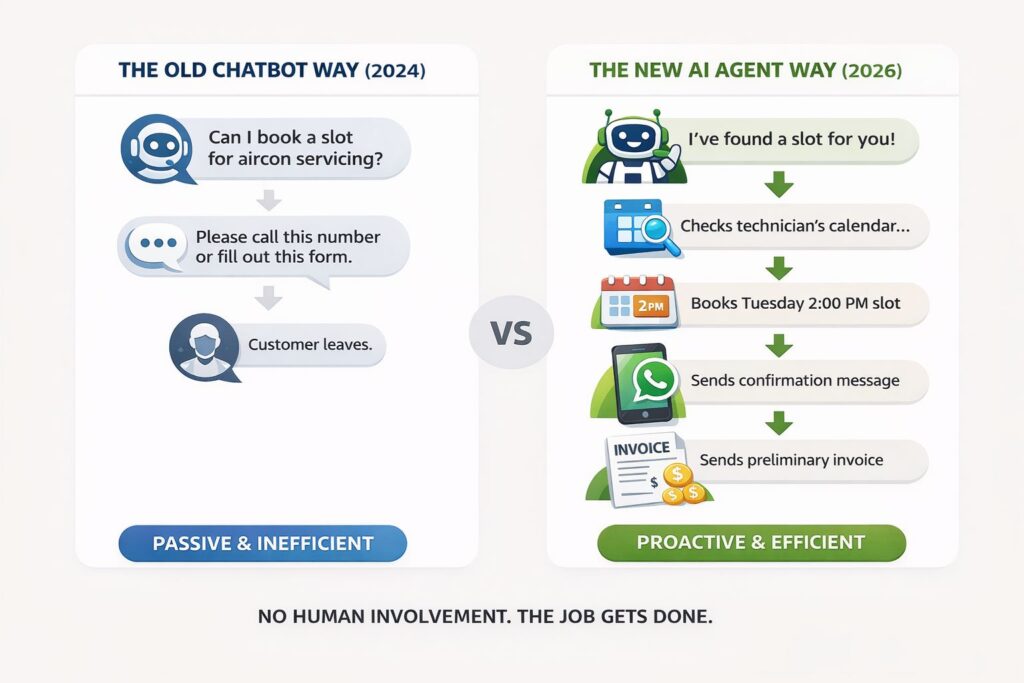
The difference between a 2024 Chatbot and a 2026 AI Agent is simple:
Chatbots are passive. They wait for a customer to ask a question, and they reply with text.
AI Agents are active. They are given a goal, and they execute tasks to achieve it.
Imagine this scenario for a local service business:
The Old Chatbot Way: A customer asks, “Can I book a slot for aircon servicing?” The bot replies, “Please call this number or fill out this form.” The customer leaves.
The 2026 AI Agent Way: The customer asks for a slot. The Agent checks your technician’s Google Calendar in real-time, finds a free slot for Tuesday at 2 PM, books it, sends a WhatsApp confirmation to the customer, and issues a preliminary invoice via your accounting software.
No human staff was involved. The work didn’t just get discussed; it got done.
Why Malaysian SMEs Need Agents, Not Just Bots
In 2026, the Malaysian digital economy is more integrated than ever. With the push for e-Invoicing and digital payments, your AI needs to talk to your other software, not just your customers.
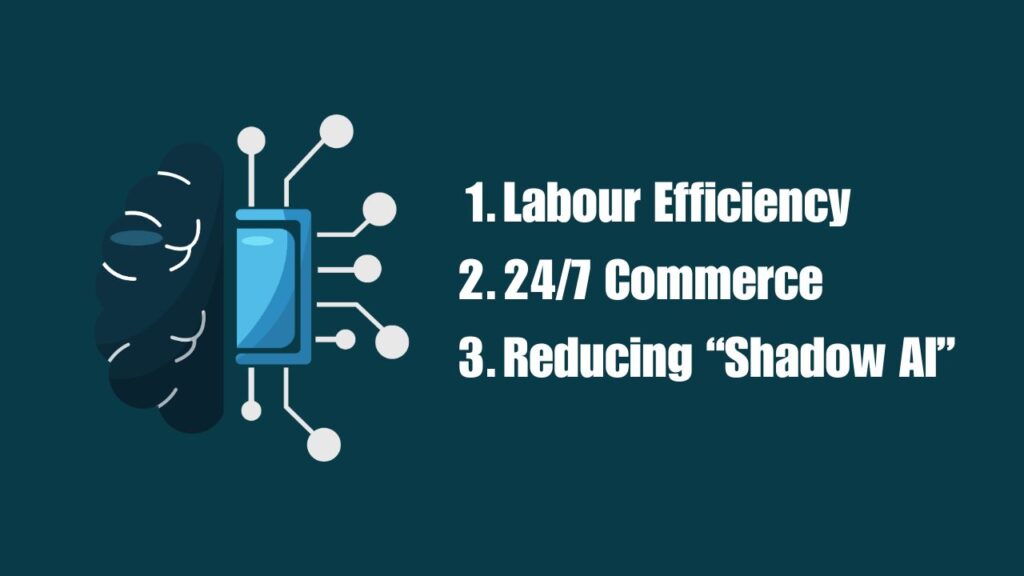
- Labour Efficiency: Hiring quality customer support staff is getting harder and more expensive. An AI Agent doesn’t just “support” staff; it acts as a junior employee, handling end-to-end workflows (like chasing payments or updating CRM records).
24/7 Commerce: Malaysian consumers now expect instant gratification on TikTok Shop and Shopee. If your WhatsApp or Website inquiry isn’t resolved instantly (not just answered, but resolved), you lose the sale.
Reducing “Shadow AI”: Using five different cheap SaaS tools often leads to messy data. An integrated Agent works across your systems centrally.
The Trap of "SaaS" AI Agents
Here is the hard truth that most software companies won’t tell you: You cannot buy a high-performing AI Agent off the shelf.
Many SaaS (Software as a Service) platforms promise “one-click setup,” but they fail when they meet the messy reality of actual business operations. They don’t know your specific refund policy. They can’t connect to your legacy inventory system. They hallucinate answers because they aren’t properly grounded in your business data.
This is why “DIY” AI often leads to frustration. An Agent that acts on behalf of your company needs to be built, not just rented. It requires:
Guardrails: To ensure it never promises a discount you can’t afford.
Integration: Custom API connections to your specific Malaysian payment gateways or logistics partners.
Oversight: A human-in-the-loop architecture to monitor performance.
The Future is "Fully Handled"
At AI-yo, we believe that business owners should focus on strategy, not prompt engineering.
You shouldn’t have to figure out how to make the AI connect to your database. That is why we moved away from the SaaS model to a Fully Handled Service. We build AI Agents that are custom-engineered to execute your specific business workflows.
In 2026, don’t settle for a bot that just chats. Hire an Agent that works.
Actional Advice
Audit your current customer support logs. Identify the top 3 tasks that require your staff to switch between tabs (e.g., “Check Order Status” -> “Open Courier Portal” -> “Reply to Customer”).
These are the first 3 tasks your new AI Agent should automate.